When you buy through links on our situation , we may realise an affiliate commission . Here ’s how it work .
Entomologists in Washington commonwealth may have destroyed a " murder hornet " nest in the notch of time , preventing as many as 200 young queens from establishing new nest .
The nest , the first ever notice in the United States , was destroy on Oct. 24 . State Department of Agriculture employeesvacuumed the invading hornets from the nestand found only prole hornet . Five days afterward , though , after they ’d removed the nest from its tree and cracked it open , they institute 76 live queen and 108 more still develop in their tiny cell capsules .
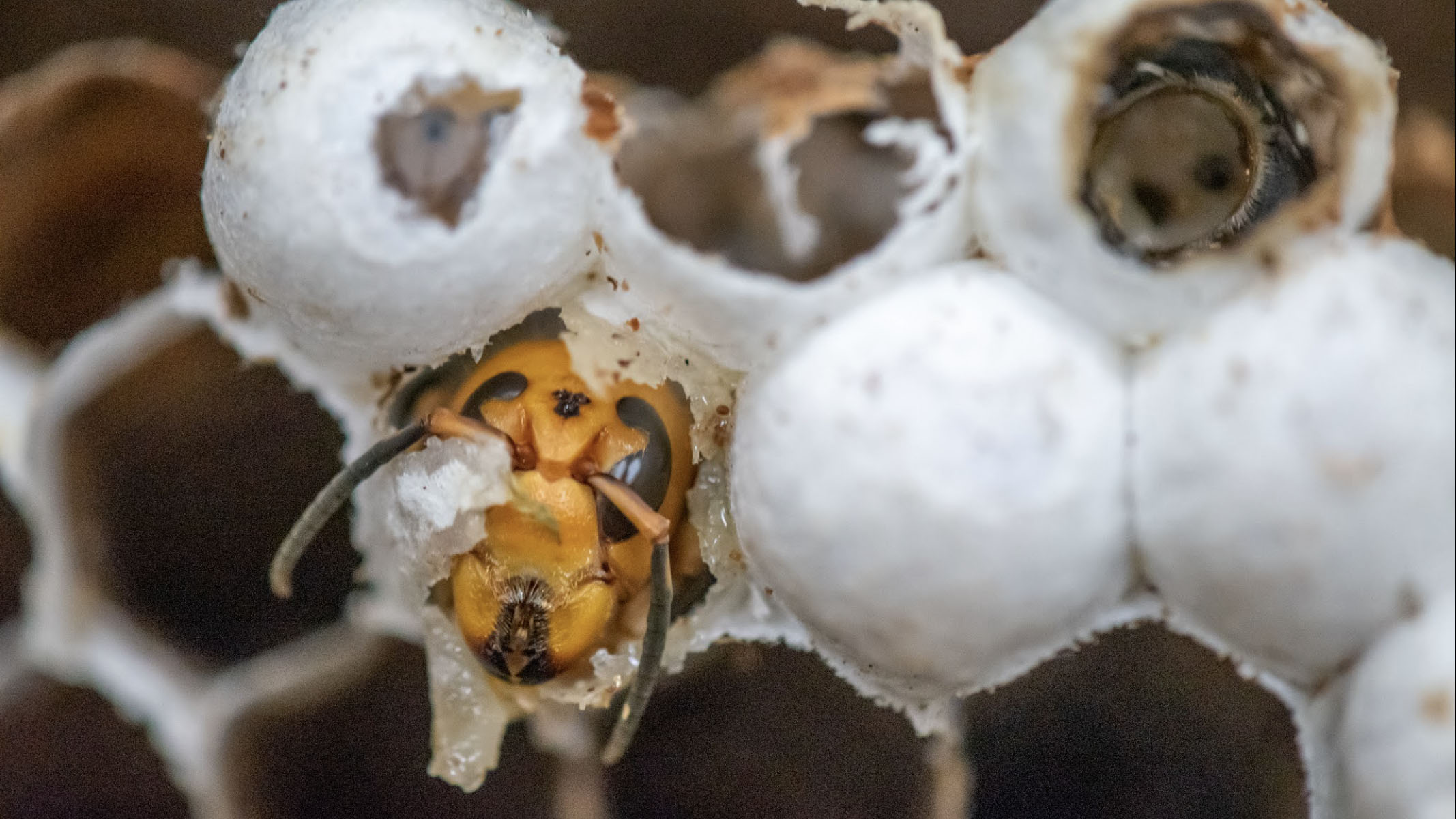
An Asian giant hornet (aka “murder hornet”) prepares to emerge from a cell in a nest discovered in Washington State.
" It ’s potential that some [ queens ] had emerge before we did the vacuum extraction and eradication on the 24th , but it ’s not entirely likely , it looks like we get there in time , " state make out bug-hunter Sven - Erik Spichigertold reportersduring a virtual press conference .
Related : Photos : execution hornet will haunt your nightmare
Invasion of the murder hornets
execution hornet , more acurrately know as Asian giant hornet ( Vespa mandarinia ) , are aboriginal to East and Southeast Asia . They raise to an intimidating 3 column inch ( 7.6 centimeters ) long and pack a nasty sting . Their greatest danger , though , is not to humans . The hornet prey on native wasps , disrupting the ecosystem , and also set on and rive the head off the honeybees crucial to agriculture . A hive of Asiatic elephantine hornets can destroy a beehive of honeybees in mere hours .
" It ’s just one more affair that the managed honeybees do n’t need to deal with , " Spichiger said . oversee honeybees are already threatened due to pathogens , parasites and pesticide .
In September 2019 , a hive of Asian giant hornets was destroy near Vancouver , British Columbia . Later that twelvemonth , reports emerged of Asian giant hornet near Blaine , Washington , and in December , a specimen was found that wasconfirmed to be one of the invasive insect .

Developing pupae of the Asian giant hornet can be seen in cells within the nest discovered in Washington State, the first murder hornet nest found in the U.S.(Image credit: Washington State Department of Agriculture)
Entomologists in Washington and British Columbia are now on a delegacy to exterminate Asiatic gargantuan hornet in North America . On Oct. 20 of this yr , Washington country agriculture section employees trammel a few of the hornet , affixed radio transmitter to them with dental dental floss , and tracked them back to their nest east of Blaine .
By the numbers
After vacuuming as many hornet as they could out of the nest and removing it from its perch 8.3 feet ( 2.5 meters ) up , the entomologists involve the nest to a cold lab to count the insects and measure the nest .
They found that the nest was 14 inches ( 35.5 cm ) tall and about 9 in ( 22.8 atomic number 96 ) in diameter , completely filling the void in the Sir Herbert Beerbohm Tree where it sat . Entomologists counted 776 private cells in the nest , which made it comparatively small for a Asian giant hornet nest ; in their native range , the worm work up nest of up to 4,000 item-by-item cellphone , Spichiger aver .
Related : Googly eyes : Photos of striking white Anglo-Saxon Protestant faces
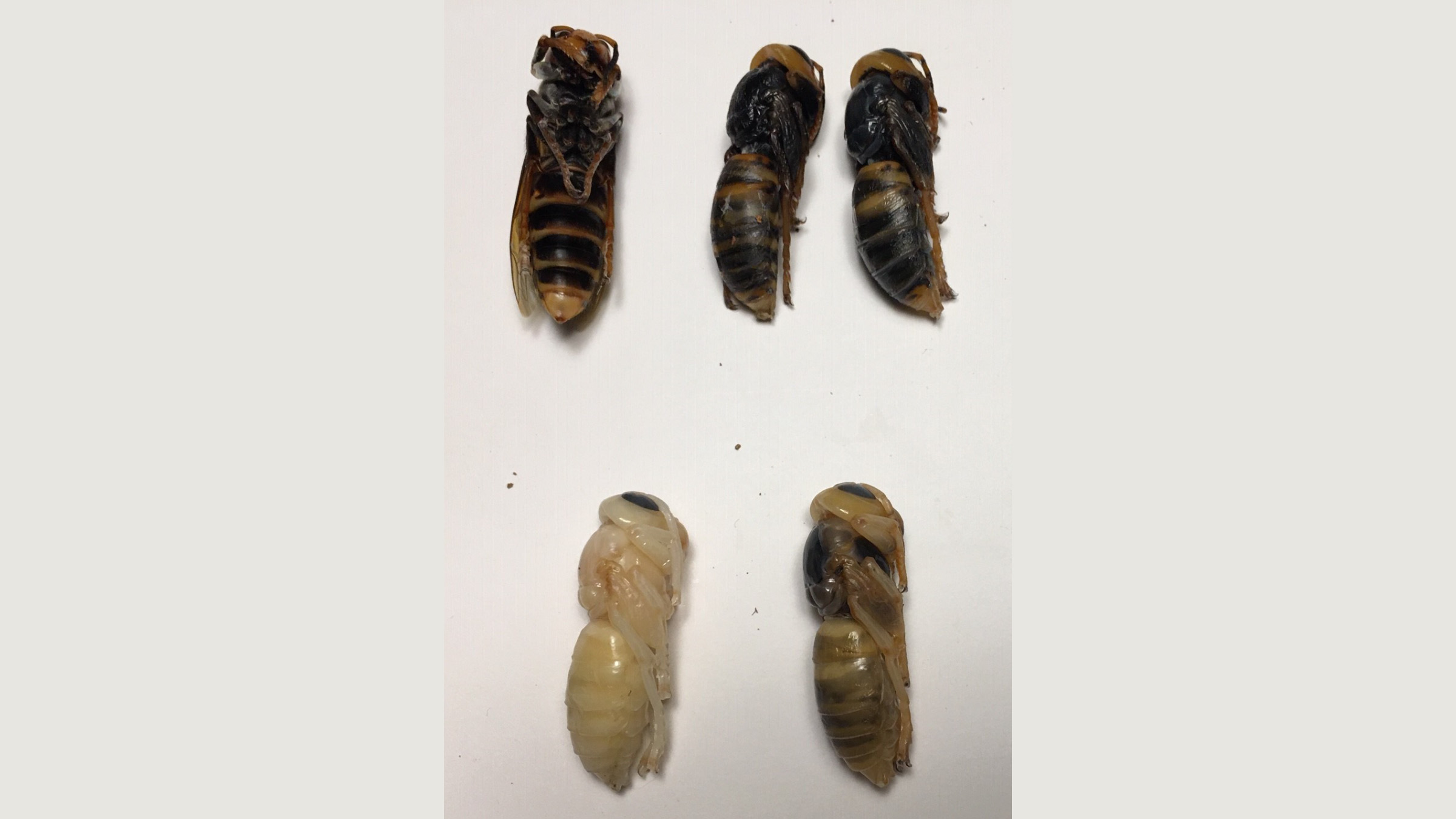
Inside the murder hornet nest in Washington State, scientists found pupae in various stages of development.(Image credit: Washington State Department of Agriculture)
In all , entomologists find 112 non - mating female worker hornets from the nest and nine males . There were six unhatched eggs and 190 hornet in their larval point , most idle by the time they were counted . Of the 76 live poove found in the nest , 75 would have been newly hatched in the time between when the nest was first disrupted and when it was open in the lab , Spichiger articulate , and one would be the beehive ’s fighting queen . Another 108 probable queens were find still seal off inside their cell in their pupal leg .
— 7 amazing bug ninja acquisition — Image drift : encroaching species—5 weird effects of bug bites
In addition , three queens were found idle in a water supply bucket near the nest placement in the days after the remotion . fresh concoct queens detain near their nest for 10 days , being fed by workers , before entangle and hibernating over the wintertime underground or in another warm , protect spot . In leaping , the queens come out to establish their own nests .

That mean that this single small nest bring forth most 200 new pouf that would have had the opportunity to set up their own colonies — though , Spichiger said , only a portion of those queen really survive to do so .
It ’s potential that a few queen hatched and escape before the nest obliteration , Spichiger said , but their number would be few .
" candidly we ’re bucked up because of the routine of queens we were able to count and kill , " he sound out .

The State Department of Agriculture will stay on to bait traps for the hornets as long as the weather is affectionate enough for them to fly . Any worker get will be label and tracked in an attempt to line up their nest . Any queen found would be seek a teammate and not likely to return to a nest , so they will be killed alternatively of tracked .
Originally release on Live Science .


